

Sambalpur scientist promotes organic farming to curb disease
Sambalpur-born scientist Shitikantha Behera promotes an integrated organic farm to curb lifestyle diseases linked to chemical fertilisers in Western Odisha.
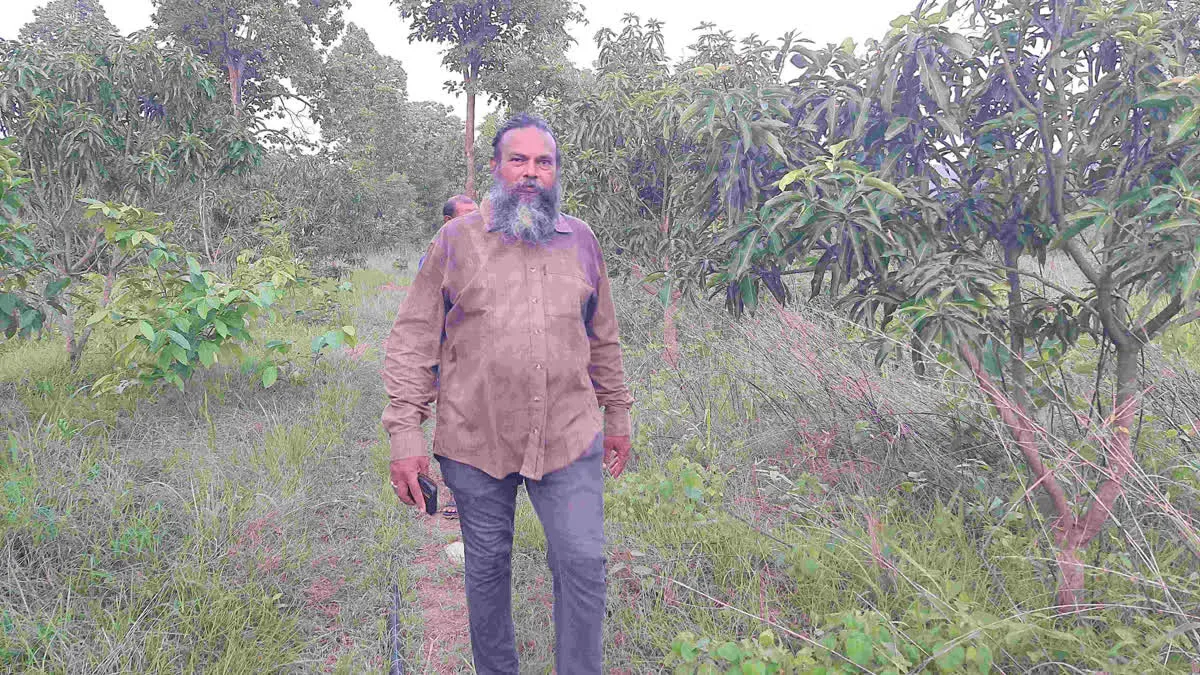
Sambalpur-born environmental scientist Shitikantha Behera launched an integrated organic farming model in 2021 on a 13‑acre farm at Gobardhan‑Badamal village in Jujumura block to combat rising lifestyle diseases such as cancer, hypertension and diabetes linked to chemical fertilisers and pesticides. Behera, who had worked as an environmental scientist in Singapore and Nigeria and earlier served with the Odisha State Pollution Control Board from 1999 to 2008, returned to India in 2018 with the desire to contribute to his homeland. He said he could not change people’s unhealthy lifestyles but could convince farmers to grow cereals, pulses and vegetables organically, noting the disturbing rise in cancer, hypertension and diabetes cases, especially in Bargarh district. He observed that even children are increasingly being diagnosed with diabetes and cancer, and that almost every family now has one or more members suffering from hypertension or diabetes, with Bargarh being referred to as one of Asia’s high cancer‑concentration regions. Behera explained that he gave up a lucrative overseas career to propagate integrated organic farming, driven by the motto ‘Eat healthy, feed healthy; poison neither the soil nor the stomach.’ By 2026 his farm, which combines dairy, goat rearing, fish farming and multi‑crop cultivation, supplies its own cooking fuel through three biogas plants run on cattle dung and produces vermicompost from slurry for use as organic manure. The initiative has attracted training visits from farmers across Sambalpur and Bargarh districts, with support from the district agriculture officer and state schemes. Behera says the model proves organic farming can be both productive and profitable, aiming to encourage a shift away from chemical agriculture.
How does Behera's integrated organic farm operate?
Behera’s farm spans 13 acres in Gobardhan‑Badamal village and houses around 50 cows whose dung fuels three biogas plants. The biogas supplies all cooking fuel needed on the farm, making it self‑sufficient in energy. Slurry from the plants is diverted to 27 compost pits where it is converted into vermicompost, which is then applied to fields as organic manure. Surplus compost is also sold to neighbouring farmers. Cow urine is collected and used as a natural pesticide on the fields. The farm also prepares Jeevamrut, which is used as a natural feed supplement in fish farming. In addition to dairy, the farm includes goat rearing and fish farming ponds. Behera personally cares for livestock on the farm. He explains that on the farm, dairy farming, fisheries and horticulture complement each other in a circular system. Vegetables are grown using a multi‑cropping system where marigold, beans and other companion plants are interplanted with tomatoes and brinjals to deter pests naturally. Behera is also known as a leading organic mango grower in Sambalpur district and has ventured into agro‑eco‑tourism by developing cottages on his farm for visitors. He asserts that the backbone of his initiative is dairy farming, noting that the farm’s three biogas plants run entirely on cattle dung, supplying all the cooking fuel required and eliminating the need for LPG. He states that the slurry from the biogas plants is converted into vermicompost in 27 compost pits, which is used as organic manure in the fields, while the surplus compost is also sold. Cow urine is used as a natural pesticide. The farm also prepares Jeevamrut, which is used as a natural feed supplement in fish farming.
What training and support does the farm provide to local farmers?
The Sambalpur district administration regularly brings farmers to Behera’s farm for training in organic farming techniques. Chief District Agriculture Officer Satyaban Soren confirms that the Agriculture Department has extended assistance to Behera under various government schemes. Farmers receive hands‑on demonstrations of the integrated model. Mango grower Chhabil Kisan from Jamankira block said after training, “We were not aware that dairy farming and other agricultural activities could be integrated so effectively under an organic farming model. After visiting this farm, we gained proper knowledge about integrated organic farming. We believe more farmers will gradually adopt this system because the State Government is also encouraging farmers interested in organic farming.” Behera has also modernised traditional organic farming through an integrated organic farming model and has achieved complete self‑reliance in bioenergy by producing biogas from cattle dung. He believes that people will not switch to organic farming overnight and that proving profitability is essential, which is why he started the farm to demonstrate that good yields and profits are possible through organic farming.
Why does Behera connect organic farming to disease prevention in the region?
Behera points to a disturbing increase in cancer, hypertension and diabetes, especially in Bargarh district, where even children are being diagnosed with serious ailments. He says almost every family now has one or more members suffering from hypertension or diabetes, and Bargarh is being referred to as one of Asia’s high cancer‑concentration regions. He states, “Although I had a well‑paying job abroad, I always wanted to do something meaningful for my motherland. That is why I started integrated organic farming with the motto, ‘Eat healthy, feed healthy; poison neither the soil nor the stomach.’” Educationist and economist Dr Umacharan Pati of Sambalpur adds that Bargarh is often called the cancer capital because the Hirakud command area has seen excessive use of chemical fertilisers and pesticides, and he praises Behera’s model. Behera urges that because of unhealthy lifestyles and food produced through chemical farming, even young children are suffering from serious diseases like cancer, noting that he came to know that Bargarh district is now being referred to as one of Asia’s high cancer‑concentration regions, therefore organic farming must be adopted. He emphasizes that his objective is to demonstrate that organic farming can be both productive and profitable, saying that once people see its success, they will naturally return to traditional organic farming methods, helping future generations stay free from deadly diseases.
Who is Shitikantha Behera?
Shitikantha Behera is a Sambalpur-born environmental scientist who previously worked with the Odisha State Pollution Control Board and abroad in Singapore and Nigeria before returning to India in 2018.
Where is Behera's organic farm located?
The farm is located at Gobardhan‑Badamal village in Jujumura block of Sambalpur district, Odisha.
What components make up Behera's integrated organic farm?
The farm includes dairy farming with around 50 cows, goat rearing, fish farming, multi‑crop cultivation of vegetables and fruits such as mangoes, three biogas plants run on cattle dung, 27 compost pits for vermicompost, and uses cow urine as a natural pesticide and Jeevamrut as a fish feed supplement.
How does the farm produce its own cooking fuel?
The farm runs three biogas plants entirely on cattle dung, which supply all the cooking fuel required on the farm, making it self‑sufficient in biogas and eliminating the need for LPG.
What training does the farm offer to farmers?
The district administration regularly brings farmers to the farm for hands‑on training in organic farming techniques, including biogas production, vermicompost preparation and multi‑cropping practices, with assistance from the Agriculture Department under state schemes.
What government support has the farm received?
The Sambalpur district administration sends farmers for training, and the Agriculture Department has extended assistance to Behera under various government schemes.
Why does Behera link organic farming to disease prevention?
He cites rising cases of cancer, hypertension and diabetes, especially in Bargarh district, linking them to unhealthy lifestyles and consumption of food grown with chemical fertilisers and pesticides, and argues that organic farming can reduce these health risks.
What health issues does Behera say are increasing in Sambalpur and Bargarh?
He notes an alarming rise in cancer, hypertension and diabetes, with children increasingly diagnosed with diabetes and cancer, and says almost every family has one or more members suffering from hypertension or diabetes.
What recognition has Behera received from local officials and experts?
Chief District Agriculture Officer Satyaban Soren confirms farmers are regularly sent for training, and educationist/economist Dr Umacharan Pati praises the model as a self‑reliant, chemical‑free system with potential to inspire more farmers.
What is the purpose of the Jeevamrut preparation on the farm?
Jeevamrut is prepared as a natural feed supplement for fish farming to enhance growth without using chemicals.
Debraj Meher
District Correspondent, Sambalpur
Debraj Meher reports on Sambalpur district's civic affairs, the Hirakud dam command area, and the region's handloom economy. He has been the Mirror's Sambalpur correspondent since 2021.
View all articles by Debraj →


Loading…