

Sal leaf plates, bowls revive rural enterprise in Sambalpur
Women’s self-help groups in Sambalpur have revived sal leaf plate and bowl production, boosting incomes and reducing plastic use.
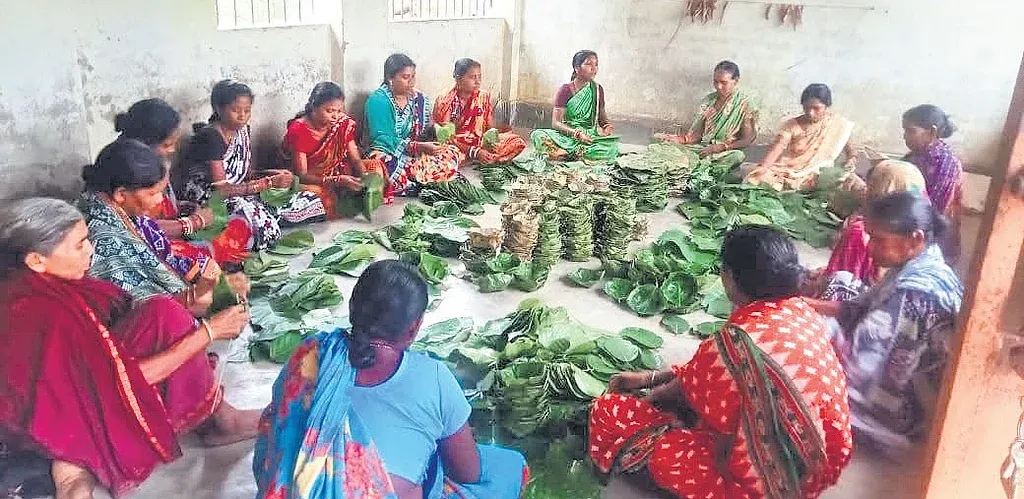
Women’s self-help groups and producer groups in Sambalpur district have revived the traditional craft of making sal leaf plates and bowls, driven by a push to cut single-use plastics and growing environmental awareness. Over 30 SHGs across various blocks are engaged, with support from the Odisha Livelihoods Mission providing training, financial aid and loans. In Bamra block, 12 SHGs and the Santoshini Producer Group received Rs 2.4 lakh for training and Rs 3.5 lakh in loans, enabling members to stitch leaves and use machines. During peak seasons, monthly earnings reach Rs 40,000–50,000 per group.
How are the self-help groups supported?
Officials of the Odisha Livelihoods Mission said that more than 30 self-help groups across Sambalpur’s blocks are involved in manufacturing sal leaf plates and bowls. Several producer groups have received specialised training to improve production techniques and operate machinery for finished products. In Bamra block, alongside the 12 SHGs, the Santoshini Producer Group also accessed the financial assistance and loans mentioned earlier. These resources have allowed the groups to move from selling raw leaves to producing value‑added items.
What impact has the initiative had on incomes and markets?
Tima Kisan, a member of the Santoshini Producer Group, said the initiative has helped women move up the value chain. “About 25 of us came together to form the group nearly four years ago. Earlier, we used to sell raw sal leaves collected from nearby forests. After receiving training, we now stitch the leaves and use machines to make leaf plates and bowls. During wedding and festival seasons, our monthly income reaches around Rs 40,000 to Rs 50,000. In other months, it ranges between Rs 15,000 and Rs 20,000,” she said. In Brahmaninali village under Jujumura block, most women from the 30 households are engaged in collecting sal leaves and preparing leaf plates. The products are supplied to nearby hotels and shops, while traders also procure them directly from the village. Supporters of the sector believe that better market access, institutional backing and wider use of leaf plates at official and community events could create a more stable market for rural producers.
Related Coverage
What are sal leaf plates and bowls traditionally used for in Odisha?
They have traditionally been used across Odisha during religious ceremonies, festivals and social gatherings.
How many self-help groups in Sambalpur are involved in making sal leaf plates and bowls?
More than 30 SHGs across different blocks of Sambalpur are engaged in manufacturing leaf plates and bowls, according to Odisha Livelihoods Mission officials.
What financial support have the groups received?
The groups have received Rs 2.4 lakh for training and other support activities, plus loans worth Rs 3.5 lakh to help establish the enterprise.
Who is Tima Kisan and what did she say about the initiative?
Tima Kisan is a member of the Santoshini Producer Group who said the initiative helped women move up the value chain, detailing income ranges of Rs 40,000–50,000 during peak seasons and Rs 15,000–20,000 otherwise.
Where is the similar model of leaf plate production being replicated?
A similar model has been adopted in Brahmaninali village under Jujumura block, where most women from 30 households collect sal leaves and prepare leaf plates.
What do sector supporters believe is needed to stabilise the market for leaf plates?
They believe improved market access, institutional support and wider adoption of leaf plates at official and community events could create a more stable market for rural producers.
Debraj Meher
District Correspondent, Sambalpur
Debraj Meher reports on Sambalpur district's civic affairs, the Hirakud dam command area, and the region's handloom economy. He has been the Mirror's Sambalpur correspondent since 2021.
View all articles by Debraj →
Loading…