

Nuapada School Lacks Toilets, Safe Water; Lessons in Damaged Rooms
Students at Patadara (Kuimunda) Upgraded Government High School in Nuapada lack toilets and safe drinking water, study in damaged classrooms after a Nor’wester storm, and use stream water for drinking.
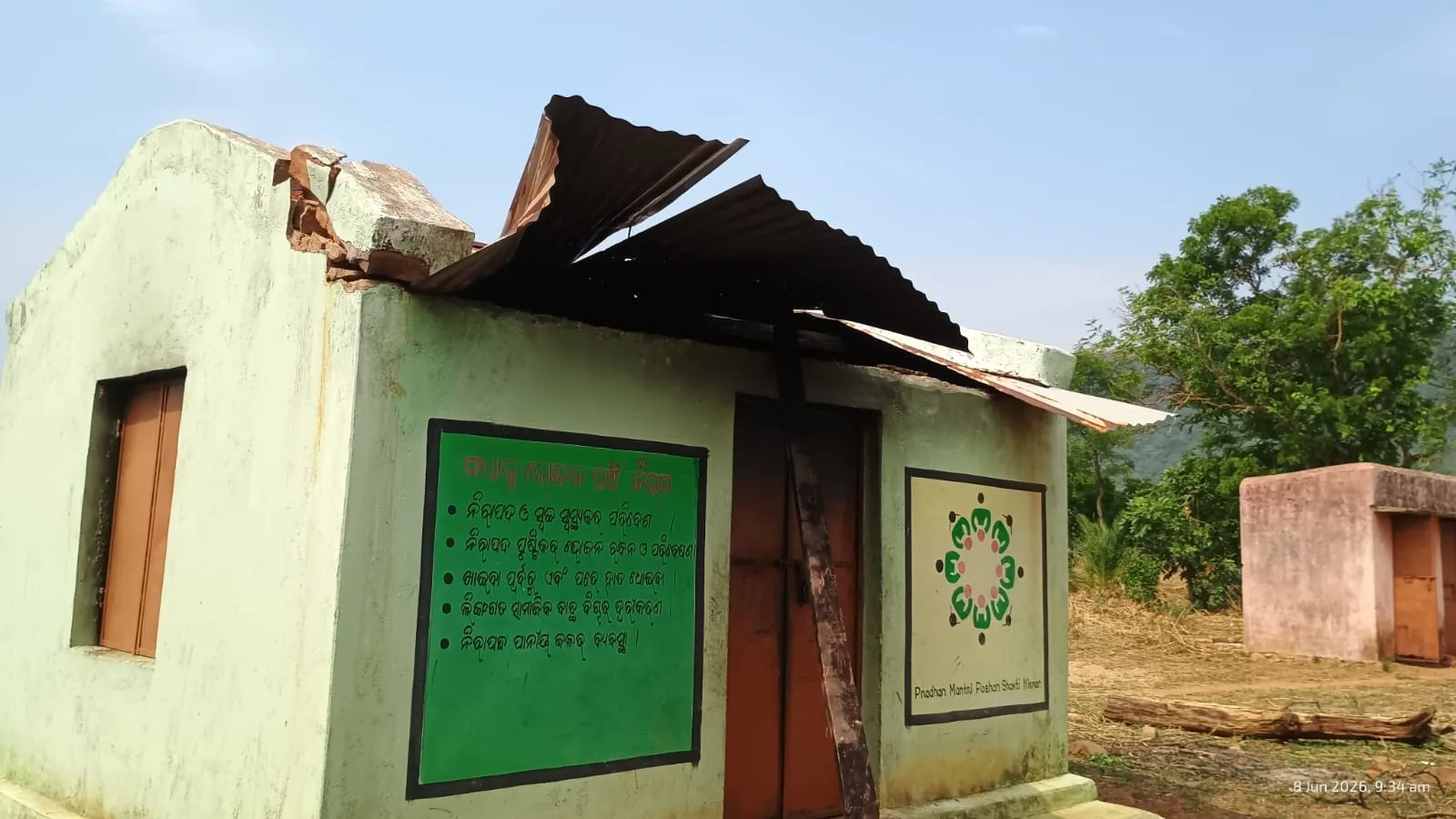
Students at Patadara (Kuimunda) Upgraded Government High School in Boden block of Nuapada district continue to study amid a severe shortage of basic amenities. Established in 1967, the school serves learners from 14 surrounding villages and hamlets, with a current enrollment of 106 pupils from Class I to X and a teaching staff of six teachers. The institution lacks proper infrastructure: classes are held in aging asbestos‑ and tin‑roofed structures, three of which suffered damage when a Nor’wester storm earlier this year blew away asbestos sheets. Because the damaged rooms have not been repaired, students and teachers conduct lessons on the school’s verandah, while persistent monsoon rains cause waterlogging that allows rainwater to seep into classrooms and disrupt teaching. The school also has no separate toilets for boys and girls, no reliable source of safe drinking water, no electricity, no playground and inadequate facilities for physical education. The school’s plight was detailed in a report by Orissa POST, updated on August 22nd, 2026, which noted that the institution is classified as an upgraded government high school. Despite its long history, the campus remains devoid of essential services that are normally expected in educational facilities.
What basic amenities are missing at Patadara (Kuimunda) Upgraded Government High School?
The school does not have separate toilets for boys and girls. When students need to relieve themselves, they must go outside the campus, often using open fields or nearby bushes, which raises concerns about privacy, hygiene and safety, particularly for female students. The school management committee has repeatedly pointed out this deficiency in its written communications to the block and district officials.
There is no proper drinking water facility on the premises. According to the school management committee, water is drawn from pits dug in a nearby stream for the purpose of cooking the midday meal. Students reportedly use the same water to wash their meal trays and, in the absence of any alternative source, consume it for drinking. The school management committee has confirmed that the same stream‑sourced water is used for both meal preparation and personal consumption. In the absence of alternative sources, students have no choice but to rely on this untreated water for their daily needs.
The school also lacks electricity, which limits the use of lighting, fans or any electronic teaching aids. Consequently, classrooms remain poorly lit and inadequately ventilated, especially during hot weather. There is no playground on the campus, and the provision for physical education is inadequate, leaving students without a structured space for sports or exercise.
Beyond the missing amenities, the school’s physical infrastructure is in poor condition. The buildings consist of old asbestos‑ and tin‑roofed structures that offer little protection against the elements. Three classrooms were damaged when a Nor’wester storm blew away asbestos sheets earlier this year; the damaged rooms remain unrepaired, forcing classes to be held on the verandah. Persistent rain leads to waterlogging across the campus, with rainwater entering the classrooms and interrupting lessons. The school management committee has notified the concerned officials about the storm‑induced damage, yet the classrooms remain unrepaired.
Established in 1967, the institution serves students from 14 villages and hamlets and currently has 106 pupils from Class I to X with six teachers. Classes are held in old asbestos‑ and tin‑roofed structures, three of which were damaged when a Nor’wester storm blew away asbestos sheets earlier this year. Because the rooms have not been repaired, students attend lessons on the verandah, and persistent rain leads to waterlogging that lets rainwater enter classrooms and disrupt teaching. In addition, teachers travel about ten kilometres each day along hilly roads to reach the school because there is no accommodation available on the premises. This daily commute involves navigating steep and uneven terrain, which adds to the physical strain on the teaching staff.
What steps have officials taken to address the school’s problems?
School management committee president Sachindra Majhi said the authorities, including the Block Development Officer (BDO), Block Education Officer (BEO), District Education Officer (DEO) and District Collector, had been informed in writing about the problems but no effective action had been taken. Majhi added that the school continues to operate without toilets, safe drinking water, electricity or a playground. Majhi stressed that the lack of response has persisted despite multiple written appeals to the authorities.
District Education Officer Prashant Kumar Mohanty said he was not aware of the school’s problems. He explained that he would first ascertain whether the school comes under the block grant system and then take steps to address the issues thereafter. He explained that determining the school’s status under the block grant framework is a prerequisite for any further intervention.
Related Coverage
What school is facing lack of toilets and safe water in Nuapada?
Patadara (Kuimunda) Upgraded Government High School in Boden block, Nuapada district.
How many students and teachers are at Patadara (Kuimunda) Upgraded Government High School?
The school has 106 students from Class I to X and six teachers.
What caused damage to three classrooms at the school?
A Nor’wester storm blew away asbestos sheets, damaging three classrooms earlier this year.
Where do students get drinking water at the school?
Students use water drawn from pits in a nearby stream for cooking midday meals, washing trays and drinking.
What actions have school officials taken to inform authorities about the problems?
School management committee president Sachindra Majhi said the authorities, including the BDO, BEO, DEO and District Collector, had been informed in writing about the problems.
What did the District Education Officer say about his awareness of the school's issues?
DEO Prashant Kumar Mohanty said he was not aware of the school’s problems and would first ascertain whether the school comes under the block grant system before taking steps.
Why are students attending classes on the verandah?
Because three classrooms damaged by the storm remain unrepaired, pupils attend lessons on the verandah.
What other facilities are missing at the school besides toilets and water?
The school lacks electricity, a playground and adequate facilities for physical education.
How far do teachers travel to reach the school each day?
Teachers travel about 10 kilometres each day along hilly roads because there is no accommodation on the school premises.
When was Patadara (Kuimunda) Upgraded Government High School established?
The school was established in 1967.
Bibhuti Bhusan Sahu
District Correspondent, Nuapada
Bibhuti Bhusan Sahu reports on Nuapada district's border-area development, migration trends, and local governance for the Mirror.
View all articles by Bibhuti →
Loading…