

Floodwaters Submerge Roads, Damage Bridges in Western Odisha
Torrential rain flooded roads, damaged bridges and submerged houses in Nuapada, Sambalpur and Bolangir, disrupting transport and prompting evacuations and school holidays.
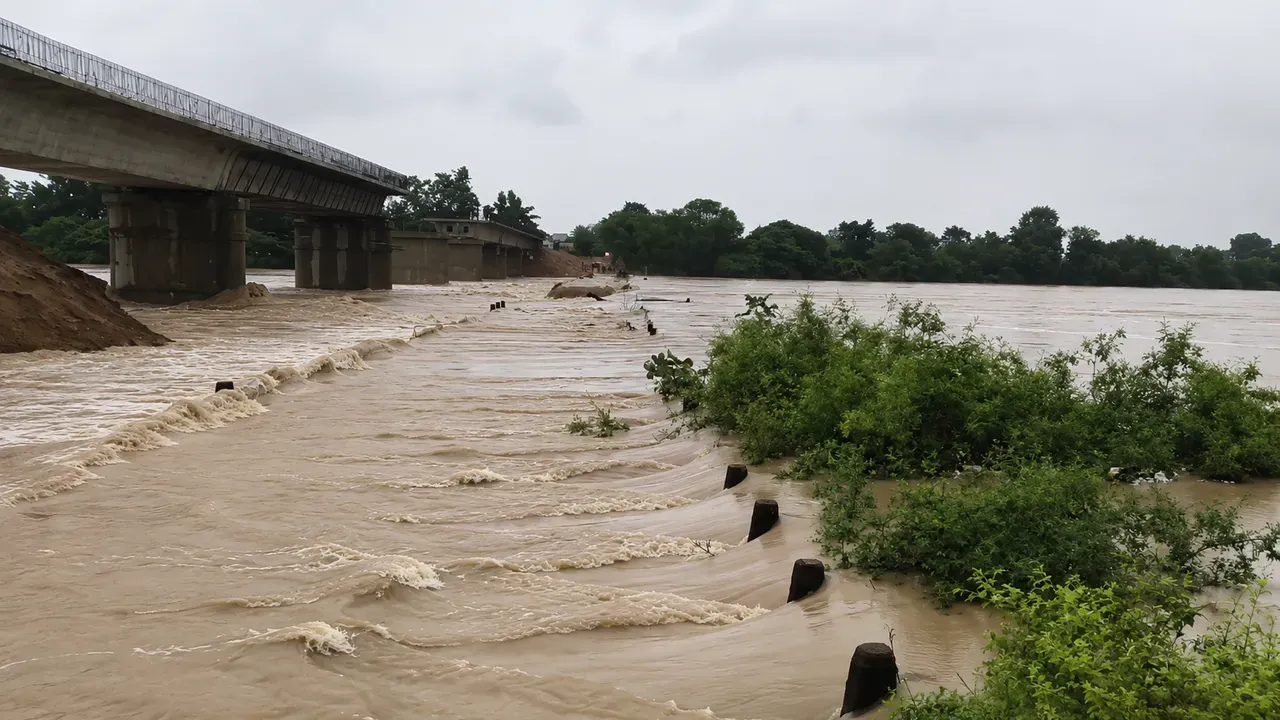
Torrential rain from a low-pressure system flooded roads, damaged bridges and submerged houses in Nuapada, Sambalpur and Bolangir districts of western Odisha on Wednesday, disrupting transport and daily life. Nuapada recorded average rainfall of 119.36 mm, with 164 mm in Nuapada block, while Sambalpur city saw 134.8 mm. Officials reported evacuations, road closures and school holidays as floodwaters rose.
Which areas were most affected by the flooding? Nuapada district recorded an average rainfall of 119.36 mm, with the highest precipitation of 164 mm in Nuapada block, according to district records. Sambalpur city measured 134.8 mm of rain till Wednesday morning, leaving several low‑lying localities waterlogged. In Bolangir district, the first floodwater of the season reached the famous Harishankar Temple as the Papanashini stream, originating from the Gandhamardan hills, flowed in spate following heavy rainfall in the upper catchment area. Tentelpada village in Boden block was reportedly cut off from the outside world, while floodwater entered multiple houses in Kandetara village and trees uprooted in the Sunabeda Ghat blocked key roads, and farmlands were seen submerged in rainwater.
What impact did the floods have on transport and daily life? The National Highway‑353 near Komna remained submerged under nearly a foot of water, disrupting vehicular movement. An old bridge connecting Taraband to Amanara and Kendubara collapsed completely, severing the link between two panchayats and forcing a detour of about 30 to 40 kilometres to reach Nuapada district headquarters or the hospital. Four families, comprising at least 20 members, were safely evacuated from Jalamkata village after floodwater surrounded their homes. Authorities declared a holiday for all Anganwadi centres, government and private schools and colleges across Nuapada district as a precautionary measure, while low‑lying areas in Sambalpur city remained waterlogged, affecting daily life.
What measures have authorities taken? Officials continued to monitor the situation as more rain was forecast. A resident expressed that “the continuous rainfall since yesterday has caused this old bridge connecting Taraband to Amanara and Kendubara to collapse completely. The link between two panchayats and the people of Chhattisgarh and Odisha has been totally severed. If anyone needs to reach the Nuapada district headquarters or the hospital, they now have to take a detour of about 30 to 40 kilometres.” The same resident added, “I urge the administration to carry out temporary repairs on the damaged bridge at the earliest to restore transportation for the public. Furthermore, work is underway on the new bridge we are currently standing on. I request that it be completed as quickly as possible once the monsoon season is over.” Another resident stated, “The bridge was supposed to be completed by 2026, but it hasn’t been built yet. We are facing so much trouble now. With such heavy rainfall, the roads are in bad shape, and school children are facing difficulties. Our commute has been completely disrupted. This is the lone route connecting Chhattisgarh.”
What is the outlook for further rain? Officials said they will continue to monitor the situation as more rain is forecast. The torrential rain was triggered by a low‑pressure system that unleashed widespread devastation across western Odisha. Authorities continue to monitor the situation as more rain is forecast.
What caused the flooding in western Odisha on July 29, 2026?
Torrential rain triggered by a low-pressure system caused the flooding across western Odisha.
Which districts were most affected by the floods?
Nuapada, Sambalpur and Bolangir districts were severely affected.
How much rainfall was recorded in Nuapada, Sambalpur and Bolangir?
Nuapada recorded average rainfall of 119.36 mm with 164 mm in Nuapada block; Sambalpur city recorded 134.8 mm; Bolangir district experienced heavy rainfall that sent floodwater to the Harishankar Temple.
What impact did the floods have on roads and bridges?
National Highway‑353 near Komna was submerged under nearly a foot of water, and an old bridge linking Taraband to Amanara and Kendubara collapsed, severing a key route to Chhattisgarh.
Were any evacuations carried out, and if so, where and how many people?
Four families, comprising at least 20 members, were safely evacuated from Jalamkata village after floodwater surrounded their homes.
What measures did authorities take in response to the floods?
Authorities declared a holiday for all Anganwadi centres, government and private schools and colleges in Nuapada, continued to monitor the situation as more rain was forecast, and residents urged temporary bridge repairs and swift completion of a new bridge after monsoon.
What is the status of the bridge connecting Taraband, Amanara and Kendubara?
The old bridge connecting Taraband to Amanara and Kendubara collapsed completely, severing the link between two panchayats and forcing a detour of about 30 to 40 kilometres.
How did the floods affect schools and Anganwadi centres?
Authorities declared a holiday for all Anganwadi centres, government and private schools and colleges across Nuapada district as a precautionary measure.
Was any village cut off due to the flooding?
Tentelpada village in Boden block was reportedly cut off from the outside world.
What is the forecast for further rain in the region?
Officials said they will continue to monitor the situation as more rain is forecast, following the torrential rain triggered by a low-pressure system.
Bibhuti Bhusan Sahu
District Correspondent, Nuapada
Bibhuti Bhusan Sahu reports on Nuapada district's border-area development, migration trends, and local governance for the Mirror.
View all articles by Bibhuti →
Loading…